Kansas Has Emerged as a Senate Battleground State. Here’s Why It Matters
ADD TIME CANADA ON GOOGLE
Kansas has emerged as a surprise battleground in the weeks leading up to the midterm elections.
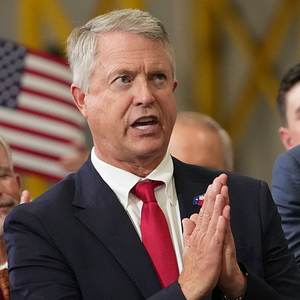
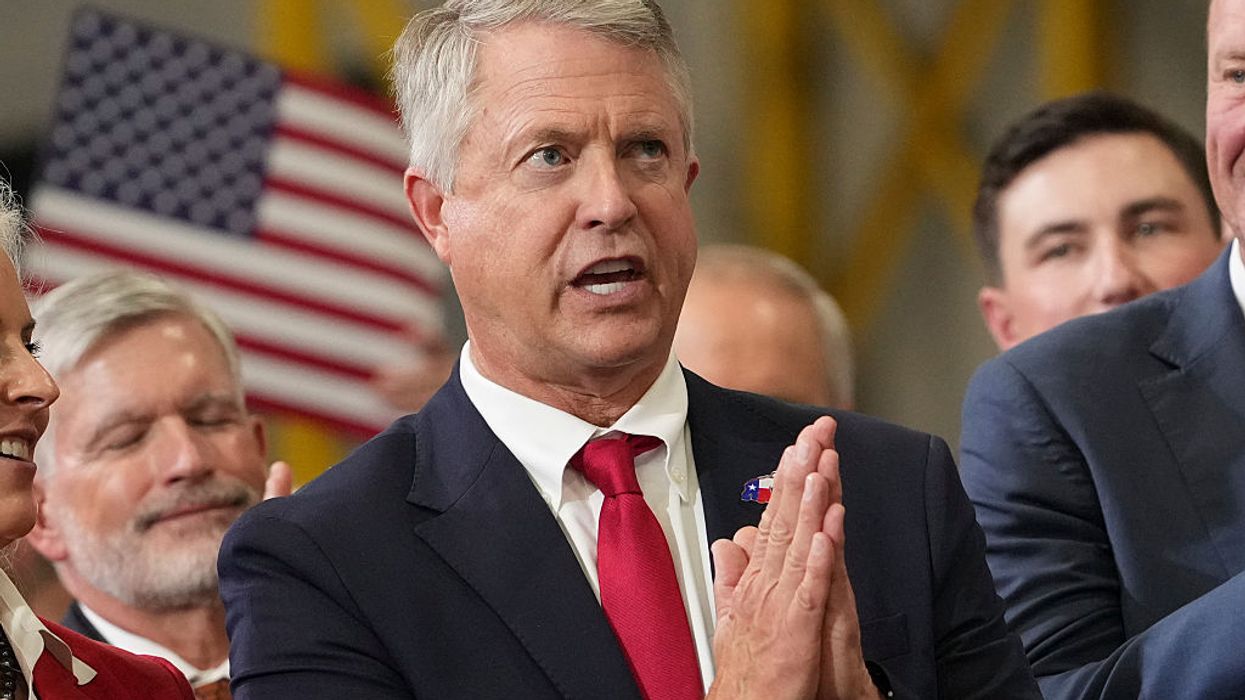
The state has not elected a Democrat to the Senate in 94 years, but Republican Sen. Roger Marshall now faces a close challenge from megachurch pastor Adam Hamilton—with repercussions that will extend beyond Kansas, as Republicans fight to keep their Senate majority this November.
An Emerson College/Nexstar Media survey of 750 likely voters showed that Hamilton had 45% of support next to Marshall’s 43% as of September. In comparison, Marshall won his 2020 general election with 53% of the vote, topping his competitor by 11 points.
Read More: Congress Is Headed for a Massive Turnover
In this race, Marshall has the financial upper hand. His campaign had reserved $2.3 million in advertising as of Oct. 2, compared with $590,000 reserved by Hamilton’s campaign, according to AdImpact figures reported by the Associated Press. Including outside groups, nearly 10 times as much advertising had been reserved to support Marshall as Hamilton.
Marshall also has Kansas’s recent voting history on his side. President Donald Trump carried the state by 16 points in 2024—a sizable Republican advantage.
Trump’s influence in the state may have once helped Marshall, who has in turn been a staunch defender of the President. He backed Trump's disproven claims of election fraud in 2020 and voted to acquit him during his second impeachment trial in February 2021. He has also publicly supported Trump’s sweeping immigration agenda.
Notably, Trump gave Marshall his “Complete and Total Endorsement” in September, lending his support to the incumbent as the race tightened.
But Kansas sentiment toward the President seems to have shifted since 2024, and a connection to the presiding Administration could hurt Marshall more than it helps. Experts say a confluence of dissatisfaction with the economy, escalating gas prices, and migration raids in the state have turned a once-obvious outcome into a deadlocked race. Given those concerns, there is the potential for Hamilton’s “X-factor” to sway Independents. About 29% of registered Kansas voters are unaffiliated, according to the Associated Press.
The Cook Political Report shifted the race from “Likely Republican” to “Lean Republican” on Sept. 23 and then moved it again, to “Toss Up,” on Oct. 6. Such predictions have not gone unnoticed by the GOP.
This campaign season, the Republicans’ Senate Leadership Fund has reserved $8.2 million for Kansas, according to AdImpact—a figure that would historically be seen in a traditional swing state like North Carolina. It marks a significant investment in a seat once seen as relatively sure—and signals to voters that the GOP is envisioning a tight contest.
Sen. Thom Tillis claimed that it is “almost statistically impossible” for Republicans to keep the House.
“I want my party to be in the best position for elections. And we’re going to take a little bit of a hit this season, and recover from it, I believe,” Tillis said on MS NOW’s The Beat on Monday.
Even Trump has expressed concerns about the midterms, bluntly addressing the potential of a blue wave while speaking at an Oklahoma rally for gubernatorial candidate Mike Mazzei last week.
“I feel a little foolish, you know. I’m saying, ‘Go out and vote, go out and vote.’ [They’re] gonna win in the last half, but still go out and vote,” he said. “We’re worried about Michigan. We’re worried about Texas. We’re worried about a few states.”
How Trump could affect Marshall’s Senate race
According to Alexandra Middlewood, an associate professor of political science at Wichita State University, the biggest challenge for Marshall’s campaign is the U.S. President.
She tells TIME that Kansas voters are blaming the Trump Administration’s policies for their economic issues—pointing to the war with Iran hiking up fuel prices; tariffs affecting the agriculture, aerospace, and other sectors; and the threat of a trade war with Canada.
“The agricultural industry is suffering right now,” Middlewood says, claiming that this is a significant issue in a state where agriculture is the largest economic driver and contributes $62 billion and close to 150,000 jobs. “At the same time, it is harvest season, and diesel prices have gone up, and so farmers and ranchers are really struggling in the state.”
Beatty also points out how Trump’s plan to lower grocery store beef prices by temporarily lifting or lowering tariffs on foreign beef imports—including Argentinian beef—angered Kansas cattle ranchers.
Separately, the Kansas Livestock Association’s political action committee declined to endorse Marshall this year. The association had backed his 2016 House campaign and his 2020 Senate campaign.
“Several cities were also upset by unannounced ICE raids,” Bob Beatty, chair of the political science department at Washburn University in Kansas, tells TIME. Immigration and Customs Enforcement (ICE) swept through major cities including Dodge City, Garden City, and Liberal in September. ICE made 104 arrests in southwestern Kansas, according to the Justice Department. City and state officials—including Marshall—said they were not notified in advance about the raids.
“From the outside it's almost as if Trump is purposely hurting Roger Marshall,” he says.
TIME has reached out to both the Marshall and the Hamilton campaigns for comment.
“Trump is not only nationally not very popular at the moment, but there's been a number of things that he's done that have specifically ticked off Kansans of all stripes—not just Democrats,” says Beatty.
In September’s Emerson survey, Trump’s approval in Kansas stood at 40%, with nearly half of likely voters naming the economy as their top issue. His national approval rating stands at 32%, according to a Reuters/IPSOS poll published Monday.
Why unaffiliated voters matter in Kansas
Kansas is seen as a red state nationally, but Middlewood says that there is a strong “libertarian” sentiment throughout the state, and a large percentage of independent voters that need to be swayed for a candidate of either party to win.
“There are actually more registered unaffiliated independents in the state than there are Democrats, and because of that, those voters really make the difference and decide pretty much every election,” she says.
While national economic policies are potentially harming Marshall’s campaign, Middlewood and Beatty say that Hamilton’s charisma, persona as a pastor, and his middle-of-the-road politics have allowed him to appeal to undecided voters. September’s Emerson poll shows that Hamilton is leading among Independents, at 42% to 27%.
“Democrats have a very good candidate Adam Hamilton came into the race as a masterful speaker and communicator as a pastor,” Beatty says. “He's been a very good fundraiser. So he's raised the money that's needed to get his message out, and he's been actually consciously aware of how Democrats win in Kansas.”
A potential path forward for Democrats
Kansas Gov. Laura Kelly is a Democrat. Beatty says that candidates from her party have had an easier time capturing the gubernatorial vote by appealing to voters as advocates of Kansas—in terms of education, roads, and property tax policies—than as a function of the Democratic Party.
Conversely, he says: “Republicans have traditionally been very good at nationalizing the U.S. Senate races in Kansas—tying the Democratic candidate to the national Democratic Party, usually the most extreme versions of the national party, and they've done it successfully.”
Beatty notes, however, that the race is incredibly close—and he says that it would not be entirely surprising if Hamilton did lose to Marshall, considering the numeric advantage for Republicans.
“This is a state that has not seen a Democrat win since 1932, so we'll believe it when we see it,” he says. “But Hamilton is certainly making a lot of believers out there.”